Stress adaptation and regulation of gene expression in eukaryotic cells via alternative transcriptional and translational mechanisms
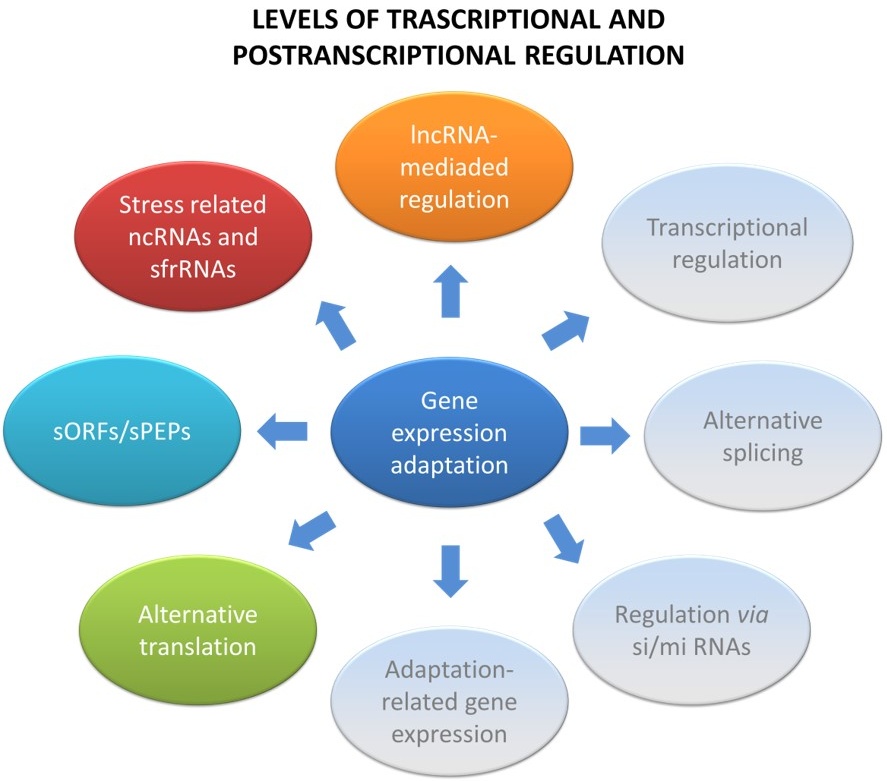
Global gene expression is subject to systematic reprogramming during cell cycle, development, metabolic changes, stress response and programmed cell death. These transitions, mediated at the transcriptional and postranscriptional levels, involve a massive flux of cellular RNAs and proteins. The major aim of this project is to establish connections between regulatory mechanisms that that use non-coding and coding properties of RNA molecules and orchestrate changes in gene expression programs during the response to physiological and stress-induced stimuli in eukaryotic cells. We will use a model organism, yeast Saccharomyces cerevisiae, where several of these processes have been characterized to some extent and are relatively straightforward to follow, but their mutual relationships are still not fully verified. We will focus on some specific and less well-recognized elements of the regulatory network that execute programmed changes that accompany cellular response to chosen stress conditions and are controlled at the level of transcription and translation, often through different classes of noncoding RNAs:
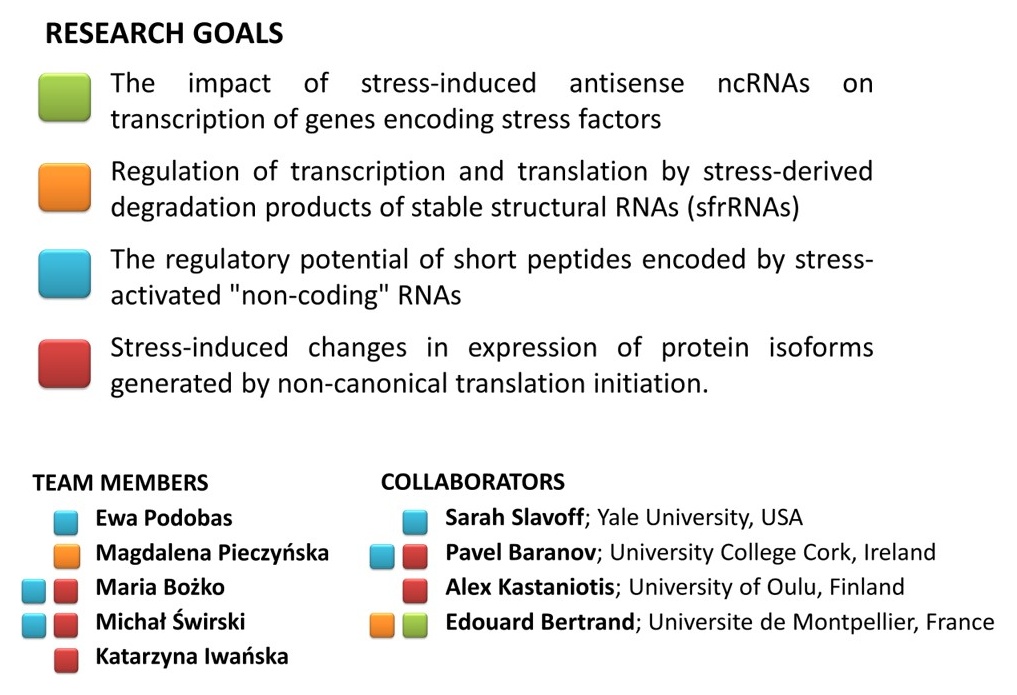
The impact of stress-induced antisense RNAs on transcription of genes encoding stress factors;
Regulation of transcription and translation by stress-derived degradation products of stable structural RNAs;
The regulatory potential of short peptides encoded by stress-activated “non-coding” RNAs;
Stress-induced changes in the expression of protein isoforms generated by non-canonical translation initiation.
We want to understand how these mechanisms are integrated into a complex regulatory network.
Project is carried out within the TEAM programme of the Foundation for Polish Science, 4.4 SG OP